

Buying the apartment is only one part of the long-term cost of ownership. Once possession is taken, owners begin paying for the services that keep the building secure, functional, clean, and properly maintained.
Apartment maintenance costs in Karachi can vary considerably from one building to another because service levels, the number of apartments, lifts, backup systems, staffing, parking areas, and amenities differ. A buyer should therefore avoid assuming that maintenance will be a small fixed amount simply because the purchase price has already been settled.
The useful question before handover is not just, “What is the monthly service charge?” It is, “What will I realistically spend over a full year to own and use this apartment?”
What apartment maintenance charges usually cover
Apartment maintenance charges generally cover shared services rather than repairs within an individual apartment. The exact list should be confirmed with the developer, building management, or residents’ management body responsible for the property.
Depending on the building, the charge may contribute towards:
- Security staff and access control
- Cleaning of corridors, entrances, stairs, and other common areas
- Lift operation and routine servicing
- Common-area electricity
- Water pumps and shared water systems
- Backup power systems where provided
- Waste collection and common-area cleaning
- Building-management staff
- Routine repairs to shared facilities
- Landscaping or common outdoor areas
- Maintenance of shared parking areas
- Fire and safety equipment servicing where applicable
The important point is that a maintenance fee should be understood as a service package rather than a single unexplained amount. Ask what is included, what is excluded, and which expenses can be charged separately.
Buyers comparing apartments for sale in Karachi should include expected post-handover costs in their affordability calculation before selecting a unit. Two apartments with similar purchase prices can produce different long-term ownership costs if one building operates more lifts, staff, backup systems, or shared facilities.
This is separate from pre-booking charges such as documentation, transfer, parking, or possession-related amounts. Maintenance budgeting begins with the recurring and occasional costs that continue after the apartment has been handed over.
Fixed monthly costs buyers should budget
Fixed costs are the easiest part of the ownership budget because they are normally charged on a regular basis. The amount may be calculated per apartment, by unit size, or under another building-management formula.
Ask management how the charge is calculated and whether it is reviewed annually. A current figure is useful, but the calculation method tells you more about what could happen as staffing, electricity, servicing, and repair costs change.
Some buildings may collect a monthly service charge that covers most common expenses. Others may separate certain services, such as backup electricity, water, parking maintenance, or facility use.
Your monthly ownership budget may therefore include:
- Regular building service charge
- Shared utility contribution
- Backup power usage or fixed contribution
- Parking-related maintenance where applicable
- Separate amenity charges
- Apartment-level electricity, gas, internet, and water bills
- Private cleaning or maintenance expenses inside the unit
Do not combine personal utility consumption with building maintenance when comparing projects. Keeping them separate makes it easier to identify which costs are controlled by household usage and which are fixed by the building.
Security, lifts, cleaning, backup systems, and common utilities
Security is one of the more visible recurring building expenses. The number of guards, entry points, shifts, surveillance systems, and access-control arrangements can affect the cost of running the property.
Lifts also create recurring costs. Routine servicing, electricity, repairs, replacement components, and emergency call-outs all contribute to building expenditure. A larger development with several towers or lifts may therefore have a different cost structure from a smaller building.
Common-area cleaning extends beyond the entrance lobby. Corridors, staircases, lift areas, parking levels, shared washrooms, waste areas, and outdoor spaces may all require regular staff and supplies.
Backup systems deserve particular attention in Karachi. Where a building provides generators, solar support, UPS systems, or another form of backup power, ask what the system actually powers and how residents are charged for its operation.
Common utilities may also include electricity for lifts, pumps, corridor lighting, security equipment, and other shared systems. Buyers should ask whether these costs are already included in the monthly service charge or billed separately.
Variable and occasional building expenses
Not every apartment ownership cost appears every month. Buildings eventually need repairs, equipment replacement, repainting, waterproofing, plumbing work, electrical upgrades, and other major interventions.
These expenses are easy to underestimate because they may not appear during the first months after handover.
A well-managed building should have a clear method for handling major expenses. That may involve maintaining a reserve fund, collecting a sinking fund, or raising a special contribution when significant work is required.
Buyers should ask how the building covers such costs before possession, rather than waiting until the first major repair.
Repairs, sinking funds, upgrades, and emergency work
A sinking fund is money collected and reserved for larger future building expenses rather than everyday operations. Where one exists, ask what it covers, how contributions are calculated, and how the fund is managed.
Potential long-term building expenses may include:
- Major lift repairs or component replacement
- Exterior painting
- Waterproofing
- Water-tank or pump replacement
- Electrical-system upgrades
- Generator or backup-system repairs
- Plumbing work in shared lines
- Parking-area repairs
- Common-area renovation
- Replacement of security equipment
- Emergency structural or building work where required
An emergency contribution is different from regular monthly maintenance. If an unexpected problem arises and the building lacks sufficient reserves, owners may be asked to contribute separately.
This is why the cheapest monthly maintenance charge is not automatically the best arrangement. A very low fee can become expensive later if important maintenance is postponed or the building has no reserve for major work.
How amenities increase running costs
Amenities can improve daily life, but each shared facility incurs operating costs.
A gym requires cleaning, electricity, maintenance, and equipment replacement. A swimming pool may require filtration, chemicals, cleaning, pumps, staff, and repairs. Landscaped areas need regular upkeep, while larger lobbies and community spaces increase cleaning and electricity requirements.
Other facilities that may affect running costs include:
- Multiple lifts
- Central or shared cooling systems
- Swimming pools
- Gyms
- Community halls
- Play areas
- Landscaped spaces
- Reception or concierge services
- Extensive CCTV and access-control systems
- Large parking areas
- Backup generators or other power systems
This does not mean buyers should avoid amenities. The useful comparison is whether your household will use them enough to justify the cost of maintaining them.
A family with children may value a maintained play area. A buyer who travels frequently may place more value on security and backup systems than recreational facilities.
Compare service levels with lifestyle requirements rather than judging a building by the number of advertised amenities.
Questions to ask before handover
The handover stage is a good time to understand how the building will operate after residents move in.
Ask the developer or building-management representative:
- What is the current monthly maintenance or service charge?
- How is the charge calculated?
- Is it based on apartment size or a fixed amount per unit?
- Which services are included?
- Which services are billed separately?
- How often can the maintenance rate be revised?
- Is there a sinking or reserve fund?
- How much is contributed to the fund?
- Who controls and reports the use of the fund?
- How are emergency repairs funded?
- What backup power systems are available?
- What does backup power cover?
- How is backup electricity charged?
- Are parking maintenance charges separate?
- Are any amenities charged individually?
- Who manages the building after handover?
- How are complaints and repair requests submitted?
- Are owners given regular statements or expense reports?
- Are there penalties for late maintenance payments?
- What expenses remain the individual apartment owner’s responsibility?
Ask for the answers in writing where possible. A maintenance schedule, building rules document, or management statement is more useful than relying on a verbal estimate.
Sample annual ownership-cost checklist
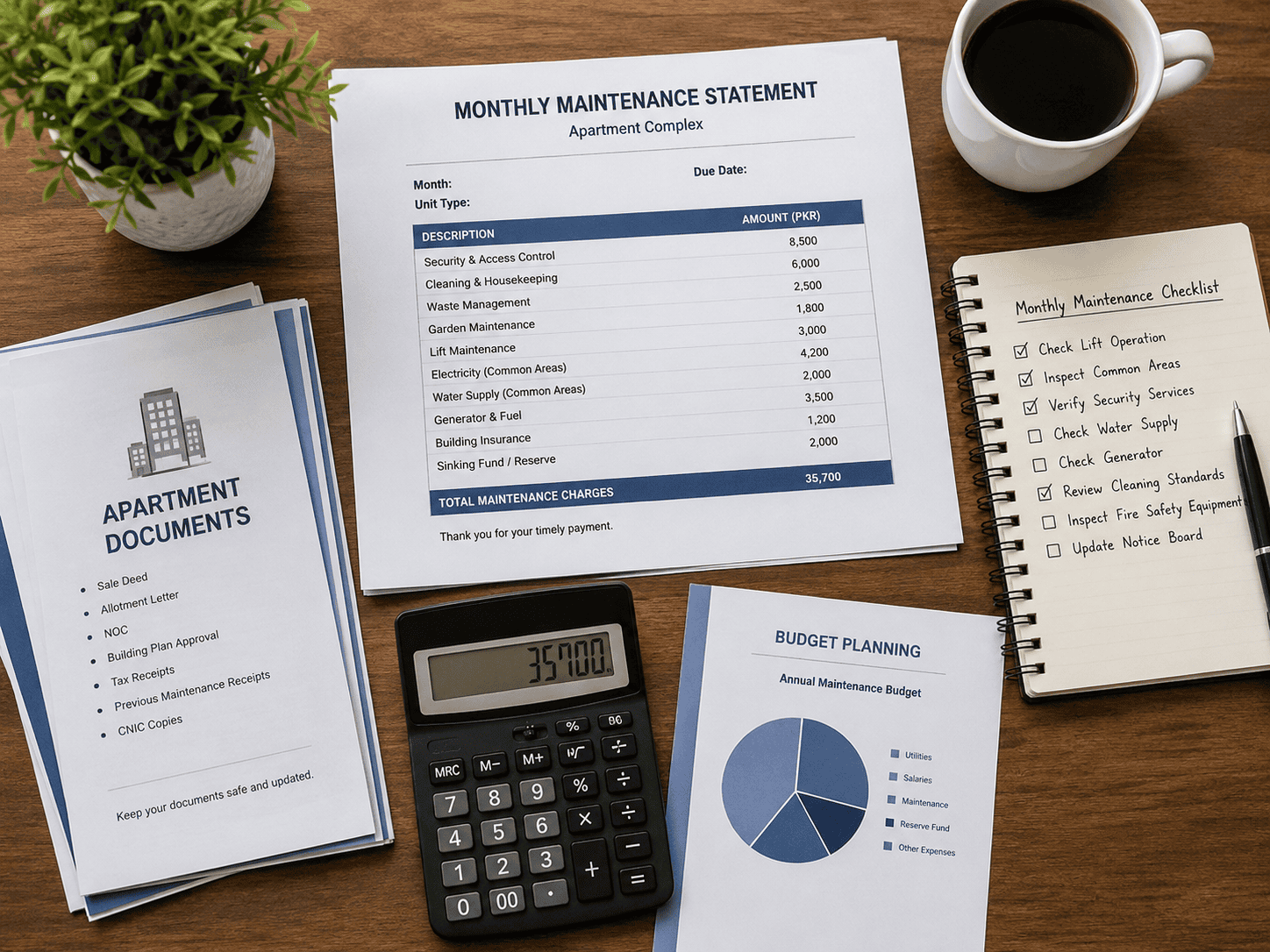
A yearly budget provides a more realistic view of apartment ownership than looking only at a single monthly service charge.
Use a simple worksheet like this after obtaining confirmed figures from the building management:
| Ownership cost | Monthly or annual? | Confirmed amount | Budgeted annual amount |
| Building maintenance/service charge | Monthly | Confirm | Calculate |
| Common utilities | Monthly or included | Confirm | Calculate |
| Backup power contribution | Usage/fixed | Confirm | Estimate |
| Parking maintenance | Monthly/annual | Confirm | Calculate |
| Amenity charges | Monthly/annual | Confirm | Calculate |
| Sinking/reserve fund | Monthly/annual | Confirm | Calculate |
| Apartment utility bills | Monthly | Based on use | Estimate |
| Routine internal repairs | Occasional | Variable | Set reserve |
| Major building contribution | Occasional | Not fixed | Set contingency |
| Emergency household repairs | Occasional | Variable | Set contingency |
Do not fill uncertain costs with invented numbers. Mark them as “not confirmed” until management provides the amount or calculation method.
Once confirmed, add the recurring charges for twelve months and create a separate contingency amount for repairs and irregular contributions. The result will give you a more useful picture of the annual apartment ownership cost.
This also makes project comparison easier. A property with a slightly higher monthly charge may provide more services or maintain a better reserve, while another may appear cheaper because several expenses are billed separately.
FAQ
How much are apartment maintenance costs in Karachi?
There is no single standard amount for all buildings. Maintenance costs depend on unit size, building services, staffing, lifts, backup systems, common utilities, amenities, and the management structure. Buyers should request the current rate for the specific building they are considering.
What is usually included in apartment service charges?
Service charges may cover security, common-area cleaning, lift servicing, shared electricity, water pumps, building staff, waste handling, and routine maintenance. The exact inclusions should be confirmed for the individual project.
Are electricity and water included in building maintenance fees?
Sometimes common-area electricity or shared water-system costs are included, while household consumption is normally handled separately. Buyers should ask management exactly which utilities are included in the service charge.
What is a sinking fund in an apartment building?
A sinking fund is money set aside for major future repairs or replacements rather than everyday operating expenses. It may be used for major lift work, exterior repairs, waterproofing, equipment replacement, or other significant building expenses.
Can apartment maintenance charges increase after handover?
They can change if building-management costs rise or if the building’s charging structure allows revisions. Buyers should ask how often rates are reviewed and how owners are informed about changes.
Do more amenities mean higher apartment maintenance costs?
Often they can. Pools, gyms, multiple lifts, landscaped areas, larger common spaces, and backup systems require electricity, staff, cleaning, servicing, and repairs. The actual cost depends on how the building operates those facilities.
What maintenance expenses should I include in an emergency budget?
An owner may need a reserve for internal plumbing, electrical repairs, appliance work, damage inside the apartment, and occasional building-level contributions that fall outside regular monthly charges.
Apartment maintenance costs in Karachi should be treated as part of the ownership budget, not as an afterthought once possession has been taken. Monthly service charges, backup systems, common utilities, reserve funds, amenities, repairs, and occasional contributions can all affect the real annual cost of living in the apartment.
Before handover, ask management for the current service charge structure and build an annual budget based on confirmed figures. Buyers still comparing options can review ZGC’s projects in Karachi using both purchase affordability and long-term running costs as part of their shortlist.
For buyers considering a specific development, the City Executive Tower project details can be assessed alongside these same ownership-cost questions. The better apartment is not simply the one with the lowest maintenance charge; it is the one where the services, building upkeep, and ongoing cost structure make sense for your household and budget.