

Receiving possession of a new apartment is an important milestone, but the handover should not be treated as a formality. This is the stage where you compare the completed apartment with the agreed layout, finishes, fixtures, and documents before accepting it.
A structured apartment handover checklist in Karachi helps you identify incomplete work, damaged finishes, utility problems, and specification differences while they can still be recorded clearly. Rushing through the inspection may leave you dealing with repairs after moving furniture into the apartment.
Set aside enough time, inspect during daylight where possible, and record every issue in writing. The objective is not to find minor faults for the sake of it. It is to confirm that the apartment is complete, usable, and consistent with the information provided for handover.
Prepare before the handover inspection
Do not arrive at the apartment without preparation. A proper inspection becomes much easier when you know what was promised, what has already been paid, and which items need to be checked.
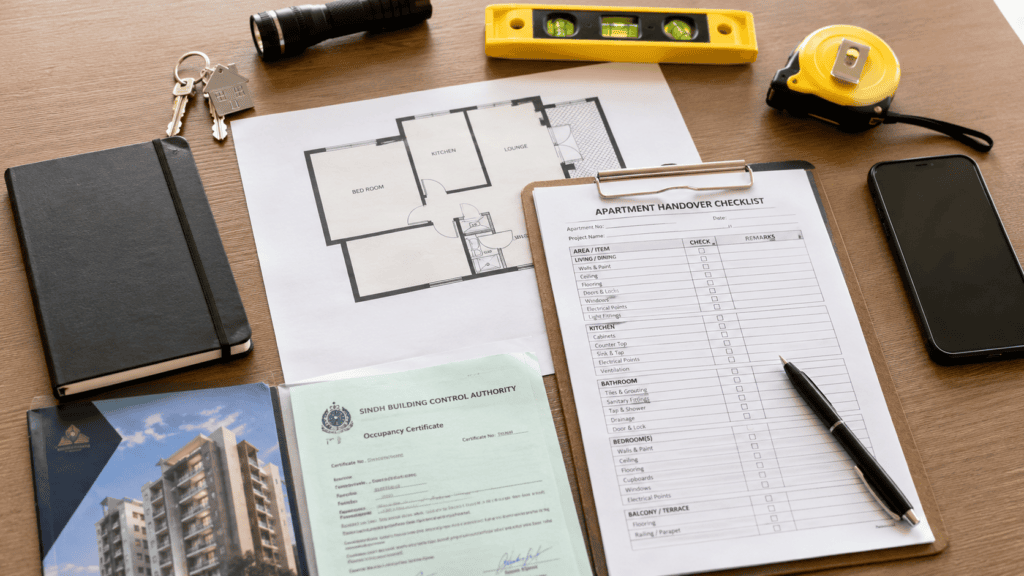
Ask the developer or authorised representative how much time will be available for the inspection. Confirm whether electricity and water will be active, whether building facilities can be tested, and who will receive the written defect list.
Where possible, carry out the inspection before moving in. Empty rooms make it easier to see cracks, uneven flooring, damaged surfaces, water marks, and incomplete fittings.
Documents, floor plan, payment status, and inspection tools
Bring the documents that describe what you were supposed to receive. These may include the booking documents, payment schedule, floor plan, specification sheet, correspondence about approved changes, and any written information provided about parking or included fixtures.
Confirm your payment status before the visit. A handover meeting can become confusing if possession-related payments, outstanding balances, or documentation requirements have not been clarified in advance.
Useful inspection tools include:
- A printed or digital checklist
- The approved or supplied floor plan
- A measuring tape or laser measure
- A phone charger or small electrical tester
- A torch
- Tissue paper for checking air movement and leaks
- A small bottle of water for drainage checks where necessary
- Removable tape or stickers for marking defects
- A phone for photographs and videos
- A notebook for recording room-by-room observations
Take photographs from a reasonable distance and then capture close-up images of each defect. Include the room name and location in your notes so the issue can be found without another lengthy inspection.
The same level of care used when comparing apartments for sale in Karachi should continue at possession. The purchase decision may already be complete, but the condition and specification of the delivered apartment still need to be checked independently.
Inspect the apartment room by room
A room-by-room approach reduces the chance of missing defects. Start at the entrance and move through the apartment in one direction rather than checking random items in different rooms.
Complete every check in one room before moving to the next. Record visible defects, test movable fittings, and compare the room with the supplied plan and specifications.
Pay particular attention to kitchens and bathrooms because plumbing, drainage, cabinetry, waterproofing, and electrical points are concentrated in these areas.
Walls, floors, ceilings, doors, windows, and fittings
Inspect walls in natural and artificial light. Look for cracks, uneven plaster, visible patches, peeling paint, damp marks, damaged corners, and gaps around electrical fittings.
Ceilings should be checked for staining, cracks, uneven finishing, exposed wiring, and signs of leakage. Water marks should not be dismissed without asking for the cause and written confirmation of any repair.
For floors, check:
- Cracked, chipped, or loose tiles
- Uneven levels between rooms
- Hollow-sounding tiles
- Damaged skirting
- Poor alignment
- Stains or construction residue
- Incorrect slope in bathrooms and balconies
Open and close every door. Check whether it moves smoothly, locks correctly, remains aligned with the frame, and has complete handles, hinges, stoppers, and other fittings.
Windows should open, close, and lock without excessive force. Inspect frames, glass, seals, and handles. Look for gaps that could allow rainwater, dust, noise, or outside air to enter.
In the kitchen, inspect cabinets, drawers, worktops, sink fittings, wall tiles, and spaces allocated for appliances. Cabinet doors should align properly and remain open or closed as intended.
Bathrooms require closer snagging. Check sanitary fittings, mirrors, accessories, shower areas, floor slopes, sealant, grouting, and the condition of doors and ventilation openings.
A practical room-by-room record can follow this structure:
| Area | Main items to inspect | Common issues to record |
| Entrance | Main door, lock, frame, bell, fittings | Misalignment, damaged lock, gaps |
| Living room | Walls, flooring, windows, sockets | Cracks, uneven tiles, damaged paint |
| Bedrooms | Doors, wardrobes if included, windows, switches | Loose fittings, poor alignment |
| Kitchen | Cabinets, sink, counter, tiles, utility points | Leakage, damaged surfaces, missing fittings |
| Bathrooms | Drainage, fixtures, seals, ventilation | Slow drainage, loose fittings, water marks |
| Balcony | Floor slope, railing, outlet, door | Standing water, damaged railing, gaps |
Test utilities and building systems
Visual inspection alone is not enough. A new fitting may look complete but fail once it is switched on, opened, or used under normal conditions.
Ask for the utilities to be active during the inspection. If any system cannot be tested, record it as pending rather than assuming it works.
Avoid accepting verbal assurances that a problem will automatically be fixed later. Add the issue to the written snagging list with an agreed follow-up process.
Water, drainage, electricity, backup power, lifts, and ventilation
Open every tap and check the flow. Allow the water to run long enough to identify leakage around sinks, basins, pipes, joints, and cabinets.
Flush toilets and check whether tanks refill correctly. Look around the base for seepage and confirm that fixtures are firmly installed.
Test drainage in:
- Kitchen sinks
- Bathroom basins
- Shower areas
- Floor drains
- Balconies
- Utility or washing areas
Water should move towards the drain without collecting in low spots. Slow drainage, unpleasant smells, or standing water should be recorded.
Test every switch and accessible socket. Check lights, fans, exhaust points, doorbells, and electrical fixtures included in the delivery. Confirm that the distribution board is labelled and can be accessed safely.
Where backup power is part of the building’s delivered services, ask which systems it supports. Common-area lighting, lifts, water pumps, and in-apartment supply may operate differently, so avoid assuming the scope.
Use the lifts during the inspection and observe their condition, operating response, accessibility, and connection to the relevant floor. Any pending lift or common-building work should be recorded separately from defects inside the apartment.
Ventilation should also be checked practically. Open windows, examine exhaust points, and consider airflow in kitchens, bathrooms, and internal rooms. A completed apartment should not be assessed only by appearance if its main living spaces feel poorly ventilated.
Check measurements and delivered specifications
Compare the apartment with the floor plan and specification information supplied during the purchase process. This is not limited to the overall area. Room dimensions, door positions, balconies, utility spaces, counters, and built-in elements can affect how the apartment functions.
Measure the areas that matter most, particularly where you plan to install wardrobes, beds, appliances, kitchen equipment, or large furniture. Even a small layout difference can affect whether the intended arrangement works.
Check whether the delivered materials and fittings match the written specification. This may include:
- Flooring type
- Wall and ceiling finishes
- Kitchen countertop and cabinetry
- Bathroom fixtures
- Doors and hardware
- Window type
- Electrical points
- Included lighting or fans
- Utility connections
- Built-in storage where promised
Do not rely on memory or marketing images when raising a specification issue. Refer to the written material available to you and ask for clarification where the description is incomplete.
Any authorised changes made during construction should also be confirmed. If you requested a modification, check that it was completed correctly and did not create problems elsewhere in the apartment.
Inspect common areas, parking, and safety
Handover is not limited to the space behind the apartment door. Corridors, stairs, entrances, lifts, parking, and shared services influence daily use and may form part of what you are taking possession of.
Walk through the route from the building entrance to the apartment. Check whether common areas appear complete, accessible, reasonably lit, and free from obvious construction hazards.
Review:
- Main entrance and access control
- Reception or security area
- Corridors and staircases
- Emergency exits
- Common-area lighting
- Lift lobbies
- Fire-safety equipment visible in shared areas
- Waste collection arrangements
- Water tanks and pumps where information is available
- Parking access and allocation
- Ramps, gates, and pedestrian routes
Confirm the location and identification of your parking space if parking is included or separately purchased. Check whether the space can be accessed easily and whether columns, walls, ramps, or neighbouring spaces affect practical use.
Do not make assumptions about the readiness or compliance of technical safety systems. Ask the authorised project representative for the relevant handover information and record any system that remains incomplete or unavailable for inspection.
Record defects and agree on rectification
A snagging inspection is useful only when the findings are organised and formally shared. A collection of unlabelled photographs may not be enough to establish what needs to be repaired.
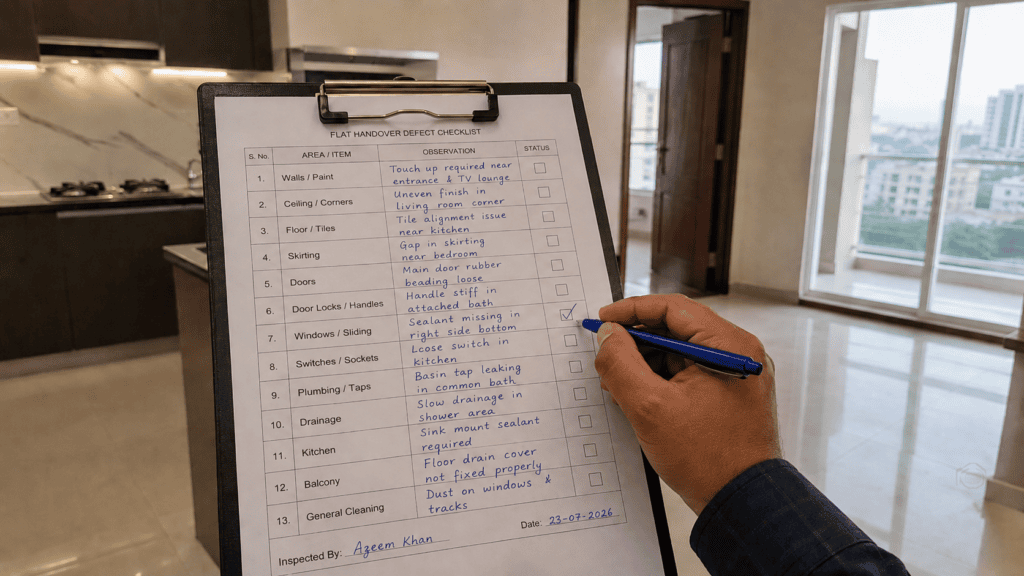
Create a numbered defect list. Each item should include:
- Room or common area
- Exact location
- Description of the issue
- Photograph or video reference
- Required clarification or repair
- Status
- Agreed follow-up date, where provided
Separate cosmetic defects from functional problems. A paint mark and a leaking pipe should both be recorded, but the leak requires more urgent attention.
Use clear descriptions. Instead of writing “bathroom problem,” write “water remains near the shower entrance after drainage test” or “leak visible below washbasin connection.”
Ask the responsible representative to acknowledge the list in writing. Clarify how rectification will be handled, who will provide updates, and whether a follow-up inspection will be arranged.
Do not mark an issue as resolved until it has been checked. A repaired surface may look complete while the underlying leakage, alignment, or electrical fault remains.
Before signing a final acceptance document, read it carefully. Where wording, defect responsibility, or handover status is unclear, seek appropriate professional advice rather than relying on assumptions.
Final handover documents to collect
The exact handover documents may vary by project and transaction. Ask for a written list of the papers, keys, access items, and records being transferred to you.
Depending on the arrangement, the handover package may include:
- Possession or handover letter
- Payment clearance or account statement
- Apartment keys
- Parking confirmation or access details
- Building access cards
- Utility information
- Maintenance or service-charge information
- Rules for renovations and moving
- Contact details for building management
- Warranties or manuals for included equipment
- Acknowledged defect list
- Rectification or follow-up record
Check names, unit details, dates, and reference numbers before accepting the documents. Keep scanned copies in secure storage and retain photographs of the apartment’s condition at handover.
Record utility meter readings where applicable. This creates a useful reference for the date possession was taken and helps avoid later confusion.
FAQ
What is apartment snagging?
Apartment snagging is the process of inspecting a newly completed apartment for defects, incomplete work, damaged finishes, utility problems, and differences from the agreed specifications before or around possession.
When should I complete the handover inspection?
The inspection should ideally take place before moving furniture into the apartment and before confirming that all work is satisfactory. Follow the project’s handover process and request time to inspect the unit properly.
How long does an apartment handover inspection take?
The time depends on the apartment size and condition. Buyers should avoid rushing and allow enough time to inspect every room, test utilities, check common areas, and prepare a written defect list.
Should I hire someone for the possession inspection?
Buyers who are not confident checking construction, plumbing, electrical work, or finishes may consider taking an experienced contractor, engineer, architect, or inspection professional. Their role and scope should be agreed in advance.
What should I do if water or electricity is unavailable during handover?
Record the relevant tests as pending. Ask when the utilities will be available and request an opportunity to complete the inspection before treating those systems as accepted.
Can I take possession if minor defects remain?
That decision depends on the nature of the defects, the written handover terms, and the agreed rectification process. Ensure all remaining issues are documented and acknowledged before signing.
What is the most important part of a flat handover checklist?
The written defect record is one of the most important parts. It should clearly identify each issue, its location, supporting photographs, and the agreed next step.
An apartment handover checklist in Karachi gives buyers a consistent way to inspect the property before settling into it. Prepare the documents, examine every room, test utilities, check shared areas, compare delivered specifications, and record defects in writing.
The handover stage should confirm what has actually been delivered. It should not become another broad property-selection exercise or a substitute for the checks completed before purchase.
Buyers who are still comparing future options can review ZGC’s projects in Karachi and examine the available project information based on budget, location, layout, and intended use. Details for The Corner Apartment and Sun Residency can also be reviewed individually before arranging further discussions.
A careful inspection cannot prevent every maintenance issue, but it can create a clear record of the apartment’s condition at possession. Take your time, keep the process documented, and do not leave important questions unresolved.