

The whispers are growing louder: “It’s a buyer’s market in Karachi!” But hold that thought. While some might be eyeing a potential dip, the latest real estate data from early 2026 paints a nuanced picture that suggests buyers might need to rethink their strategy. Far from a distressed market, Karachi’s real estate is demonstrating surprising resilience and strategic shifts.
Let’s dive into the numbers and trends that are reshaping the landscape.
The Myth of the “Buyer’s Market”
Typically, a buyer’s market is characterized by an abundance of properties, declining prices, and sellers eager to offload assets. While Karachi has seen some moderation in the frenetic pace of previous years, the core indicators point away from a widespread buyer’s paradise. In fact, average property values have seen significant year-on-year increases, albeit with a settling growth rate in recent months.
While 2026 might seem like the perfect time for buyers to capitalize on the market, the data suggests that the reality may not align with popular perceptions. Let’s examine the facts and figures that challenge the conventional wisdom surrounding Karachi’s real estate market.
Karachi Housing Market Overview (2025)
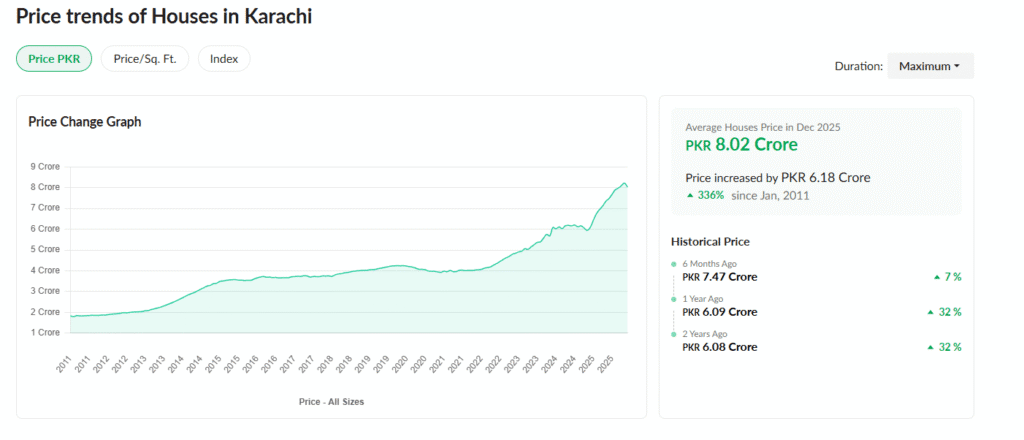
The story of Karachi’s housing market is equally compelling. The average house price in Karachi is expected to reach PKR 8.02 Crore by December 2025, reflecting a staggering 336% increase since December 2010.
Breaking it down:
- 6 months ago, the average house price was PKR 7.47 Crore, up by 7%.
- 1 year ago, it was PKR 6.09 Crore, reflecting a 32% increase.
- 2 years ago, it stood at PKR 6.08 Crore, also showing a 32% rise.
This sustained increase indicates that the housing market is continuing its upward trajectory, making it a difficult environment for buyers.
Price per Square Foot for Houses in Karachi (2025)
Just like flats, houses in Karachi have also experienced significant price hikes. By December 2025, the average price per square foot for houses is projected to reach PKR 25.58 Thousand, a 336% increase since 2010.
Historical figures:
- 6 months ago, it was PKR 23.83 Thousand/Sq. Ft., a 7% increase.
- 1 year ago, it stood at PKR 19.42 Thousand/Sq. Ft., a 32% increase.
- 2 years ago, it was PKR 19.4 Thousand/Sq. Ft., again showing a 32% rise.
This data reflects a robust upward trend, further reinforcing that the market is strongly tilted in favor of sellers.
Index Trends for Houses in Karachi (2025)
The overall index for houses in Karachi by December 2025 is projected to be 436, a 336% increase from December 2010.
Historical index data:
- 6 months ago, the index was 406, a 7% increase.
- 1 year ago, it was 331, showing a 32% increase.
- 2 years ago, it was also 331, reflecting a 32% rise.
This persistent growth suggests that the housing market in Karachi remains favorable to sellers, with demand continuing to outpace supply.
These figures further highlight that the market is experiencing demand pressure, with certain sizes seeing notable price increases.
All The Facts are Source From Zameen.com Index
Karachi Flats Market Trends (2025)
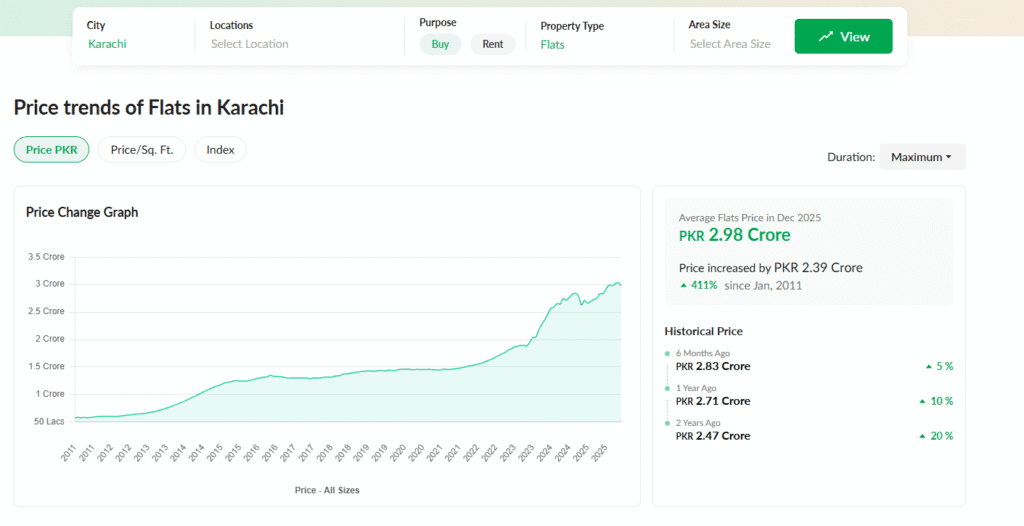
The data for flats in Karachi further reinforces the strong demand in the city’s real estate market. By December 2025, the average price of flats in Karachi is expected to rise to PKR 2.98 Crore, marking an increase of PKR 2.39 Crore, or 411% since 2011. Historical trends show an upward trajectory:
- 6 months ago, the price stood at PKR 2.83 Crore, a 5% increase.
- 1 year ago, the price was PKR 2.71 Crore, showing a 10% rise.
- 2 years ago, it was PKR 2.47 Crore, reflecting a 20% increase.
In terms of price per square foot, Karachi’s flats are also experiencing impressive growth. The average price per square foot is projected to reach PKR 16.87 Thousand by December 2025, reflecting a 411% increase since 2011. This continued rise indicates that, like houses, flats are becoming more expensive and less accessible for new buyers. The historical price data shows that:
- 6 months ago, the price was PKR 16.11 Thousand/Sq. Ft., a 5% increase.
- 1 year ago, it was PKR 13.44 Thousand/Sq. Ft., marking a 25% rise.
- 2 years ago, the price stood at PKR 12.3 Thousand/Sq. Ft., a 37% increase.
The market index for flats also reflects this strong growth. By December 2025, the flats index in Karachi is projected to be 511, a 411% increase since 2011. Historical index data indicates:
- 6 months ago, the index was 486, a 5% increase.
- 1 year ago, it was 466, reflecting a 10% increase.
- 2 years ago, the index was 424, a 20% rise.
This data highlights the robust growth in Karachi’s flat market, underscoring the ongoing trend of rising prices driven by increasing demand and limited supply.
Price Trends of Flats in Shahra-e-Faisal (2025)
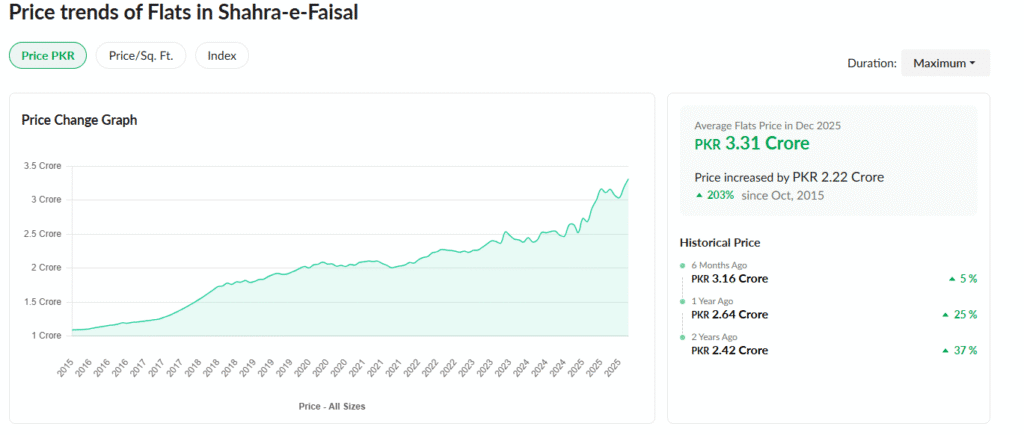
Starting with Shahra-e-Faisal, a well-known location for residential flats, the price trends paint a picture of rapid growth. The average flat price has increased significantly, with a 203% rise since October 2015. By December 2025, the average flat price in Shahra-e-Faisal is projected to reach PKR 3.31 Crore, reflecting a price increase of PKR 2.22 Crore. This kind of rise suggests a seller’s market rather than a buyer’s one.
The historical data shows an upward trajectory across multiple time frames:
- 6 months ago, the price stood at PKR 3.16 Crore, a 5% increase.
- 1 year ago, it was at PKR 2.64 Crore, a 25% increase.
- 2 years ago, the price was PKR 2.42 Crore, a 37% increase.
Clearly, the market has been steadily moving upwards, indicating high demand and limited supply.
A Golden Investment Opportunity at City Executive Towers
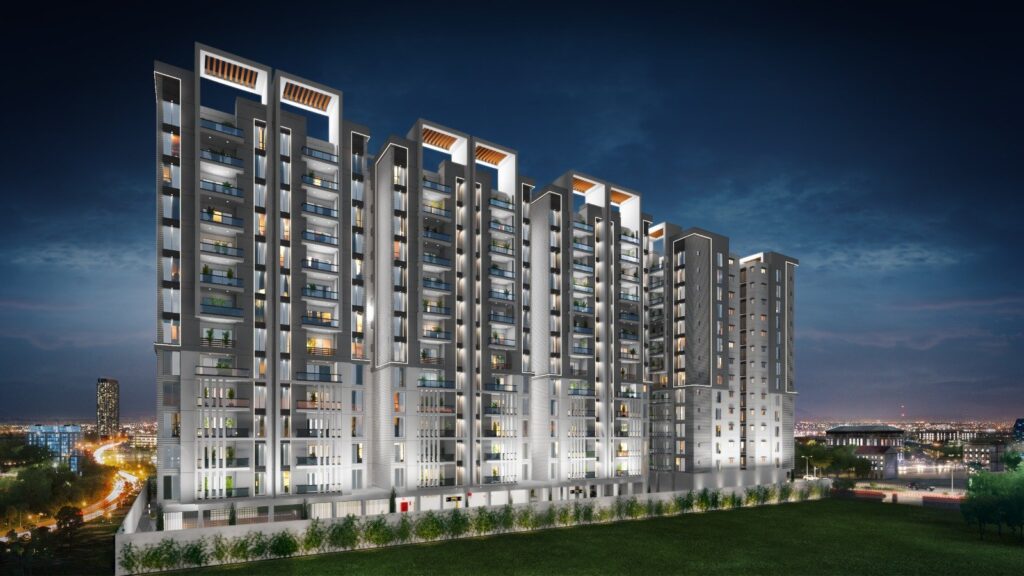
For those looking to capitalize on the market without the immediate pressure of high upfront costs, City Executive Towers presents a compelling opportunity. With an under-construction project offering an easy entry point, you can secure a unit with just a PKR 680,000 down payment and the total price starting at PKR 1.90 Crore. However, the developer is offering a limited-time discount of PKR 20 Lakh, bringing the total price down to an attractive PKR 1.70 Crore.
This offer provides investors with an opportunity to enter a growing market at a significantly discounted price, especially considering that the location is in an area poised for future appreciation. The flexibility of a smaller initial investment combined with the substantial discount makes this an ideal choice for those who wish to lock in value at a prime location while avoiding the steep upfront costs typically associated with Karachi’s real estate.
As the demand for flats in areas like Shahra-e-Faisal continues to rise, investing in City Executive Towers now could yield high returns once the project is completed. It’s a chance to secure a property in an area with ongoing growth while enjoying a well-structured payment plan and a substantial price reduction making it an appealing proposition for savvy investors.
Price per Square Foot in Shahra-e-Faisal (2025)
When we consider the price per square foot, the story continues to show a similar trend. By December 2025, the average price per square foot in Shahra-e-Faisal is expected to hit PKR 16.87 Thousand, a 203% increase from October 2015.
Comparing historical prices:
- 6 months ago, the price was PKR 16.11 Thousand/Sq. Ft., marking a 5% increase.
- 1 year ago, it was PKR 13.44 Thousand/Sq. Ft., showing a 25% rise.
- 2 years ago, it stood at PKR 12.3 Thousand/Sq. Ft., reflecting a 37% increase.
This escalating trend further suggests that the market is not as favorable to buyers, especially with such rapid price escalations in just a couple of years.
Index Trends for Flats in Shahra-e-Faisal (2025)
Another perspective can be seen through the index changes, which track the overall market movement. By December 2025, the index for flats in Shahra-e-Faisal is projected to be 291, a 191-point increase from October 2015.
Looking at the historical index:
- 6 months ago, the index was 289, up by 5%.
- 1 year ago, it stood at 241, showing a 25% increase.
- 2 years ago, it was 221, marking a 37% rise.
This continuous growth in the index signifies that flats in this area have become more expensive and less accessible, reinforcing the notion that it’s a seller’s market.
Infrastructure as an Appreciation Catalyst
Major infrastructure projects are literally paving the way for property value growth. The Green Line BRT is a prime example; areas along its corridor have seen a significant 12-15% appreciation in value as connectivity and accessibility improve dramatically. The ongoing work on the Karachi Circular Railway (KCR) promises to further unlock residential and commercial potential in previously underserved areas. Good infrastructure doesn’t just make life easier; it adds tangible value to real estate.
The Return of the Rental Yield Investor
The days of purely speculative plot investments are gradually giving way to a more pragmatic approach. Investors are increasingly looking for stable rental yields, making apartments in well-managed, gated communities an attractive option. As inflation stabilizes, predictable rental income becomes a more compelling proposition than purely relying on capital appreciation.
What Does This Mean for Buyers?
While it might not be a “buyer’s market” in the traditional sense, 2026 offers a window of opportunity for informed buyers:
- Strategic Buying: Instead of waiting for a crash, buyers should identify growth corridors and areas benefiting from infrastructure development.
- Focus on Value: Properties in emerging vertical communities or areas with improving connectivity offer long-term value.
- Due Diligence is Paramount: With stricter regulatory scrutiny and FBR valuation tables, ensuring “all dues clear” and “SBCA approved” projects is more critical than ever.
Conclusion: Is 2026 Really a Buyer’s Market?
Karachi’s real estate market in 2026 is less about a “buyer’s market” and more about a maturing market. Prices are stabilizing after significant gains, but underlying demand, strategic development, and infrastructure improvements continue to drive value. For buyers, this means opportunities still exist, but they require a sharper understanding of market dynamics and a proactive approach, rather than waiting for a mythical downturn.
So, if you’re looking to invest or buy a home in Karachi, the data suggests that waiting too long might mean missing out on significant opportunities in a market that continues to demonstrate impressive resilience and strategic growth.
Related